
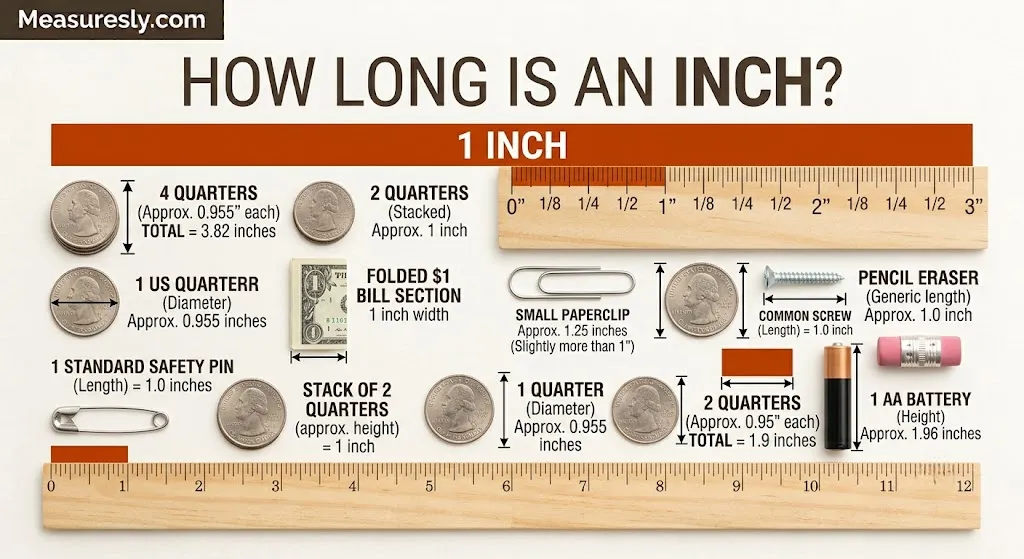

How long is an inch? There is a fixed value of electron-identical length using which an inch is equal to 25.4 millimeters or 2.54 centimeters, a measurable length that is true everywhere in the world. Such numbers are easy to pronounce but difficult to imagine in your mind. The most instant solution is to hold something you know: an AA battery out of a pocket, a US quarter, or a house key about the size of a dime. When you relate the measurement to something you have known urgently, you no longer need to use a ruler to determine the sizes of the small objects just by glancing at them.
How Long Is an Inch? Conversion Chart
Knowing the length of an inch can be useful when talking about measurements in a day to day scenario, whether on a list of products or in describing the size of something when a ruler is not readily on hand. The chart below ought to give you the quick and accurate values as you change one inch into less used centimeters, millimeters, feet, etc.
| Unit | Value |
| Inches | 1 |
| Centimeters | 2.54 cm |
| Millimeters | 25.4 mm |
| Feet | 0.083 ft |
| Meters | 0.0254 m |
| Yards | 0.0278 yd |
| Micrometers | 25,400 µm |
1 Inch to Centimeters, MM, Feet, and Other Units
People rarely search for just one conversion. Combining every common unit into a single section saves time and answers the full question in one place.
1 Inch to Centimeters
One inch equals exactly 2.54 centimeters, since this figure comes from the international agreement signed in 1959. So the math looks like this:
- 1 × 2.54 = 2.54 cm
This conversion shows up constantly in tailoring, furniture shopping, and product packaging.
1 Inch to Millimeters
Millimeters offer more precision than centimeters for detailed work. Since one centimeter equals 10 millimeters, one inch converts to:
- 2.54 × 10 = 25.4 mm
Engineers and machinists rely on this exact figure for manufacturing tolerances and technical drawings.
1 Inch to Feet
There are 12 inches in one foot, so the conversion runs in reverse here compared to centimeters:
- 1 ÷ 12 = 0.083 feet
This conversion matters most in construction, room layouts, and architectural plans.
1 Inch to Meters
Since one meter equals 100 centimeters, and one inch equals 2.54 centimeters, the math works out to:
- 2.54 ÷ 100 = 0.0254 meters
Scientists and technical writers use this figure when documentation needs to stay in metric form.
Inch Comparison Chart
| Measurement Type | Equivalent Size |
| Inches | 1 in |
| Centimeters | 2.54 cm |
| Millimeters | 25.4 mm |
| Paperclip | Full straightened length |
| US quarter | Diameter, just under |
| Bottle cap | Diameter across the top |
| AA battery | Diameter, roughly half |
| House key | Width at the widest point |
| Sewing pin | Length from head to tip |
| Postage stamp | Width, just under |
How Long Is an Inch?
An inch equals 2.54 centimeters, and this specific amount is important in the design of furniture, clothes, and interior design planning. Because the majority of measuring in the world is in metric, when a US audience must have the size of an object, professionals will transform measurements into inches, and the figure will always be the same regardless of the place it was computed.
The standard is 2.54 cm worldwide, so be it a shelf that you order on the internet or a suitcase that you weigh against the airline restrictions, the number remains a constant. Such consistency eliminates the speculation in cross-border shopping as well as in DIY planning.
How Long Is an Inch in Simple Terms?
An inch will approximate a quarter of a US width or the diameter of an AA battery. It is so short it will fit into a fingertip, but so long that it can be a real working unit in the sphere of construction, sewing, and in shopping activities of daily use.
In this case, length and width are synonymous, as an inch is a straight linear measure whether in direction or not. When you relate this figure to an object which you can hold in your hands, it becomes much faster and easier to compare it with the rest of the sizes.
Everyday Objects That Help Visualize an Inch
Many people struggle to estimate small lengths without a measuring tape nearby. Thankfully, several common household items sit close to one inch in size, so visual estimation becomes simple once you know where to look.
Examples include:
- A small paperclip, straightened flat
- The top joint of an adult thumb
- A US quarter coin’s diameter
- A standard bottle cap across the top
- A small house key at its widest point
Such comparisons allow you to determine size too fast when using the internet to do your shopping or when preparing to go somewhere, and before you even pick up a ruler to measure a small item, you know how it will look.
How long is an inch Compared to Nearby Measurements
Visualizing this measure together with corresponding values will make you realize what you see, relative to a larger scale. To make life easy, the table below allows you to view and scan it before taking whatever number you want.
| Inches (in) | Centimeters (Exact) | Centimeters (Rounded) |
| 0.5 in | 1.27 cm | 1.3 cm |
| 0.75 in | 1.905 cm | 1.9 cm |
| 1 in | 2.54 cm | 2.5 cm |
| 1.5 in | 3.81 cm | 3.8 cm |
| 2 in | 5.08 cm | 5.1 cm |
| 3 in | 7.62 cm | 7.6 cm |
| 5 in | 12.7 cm | 12.7 cm |
Once you scan across this range, a clear pattern shows up. Every extra inch adds roughly 2.5 centimeters, which makes it easier to estimate nearby measurements without recalculating each one from scratch.
10 Common Household Items That Measure About An Inch
The twelve items below present you with a choice of objects depending on the things available. They all provide somewhat different estimating methods, so choose the one that is in accordance with your everyday habits.
A Small Paperclip
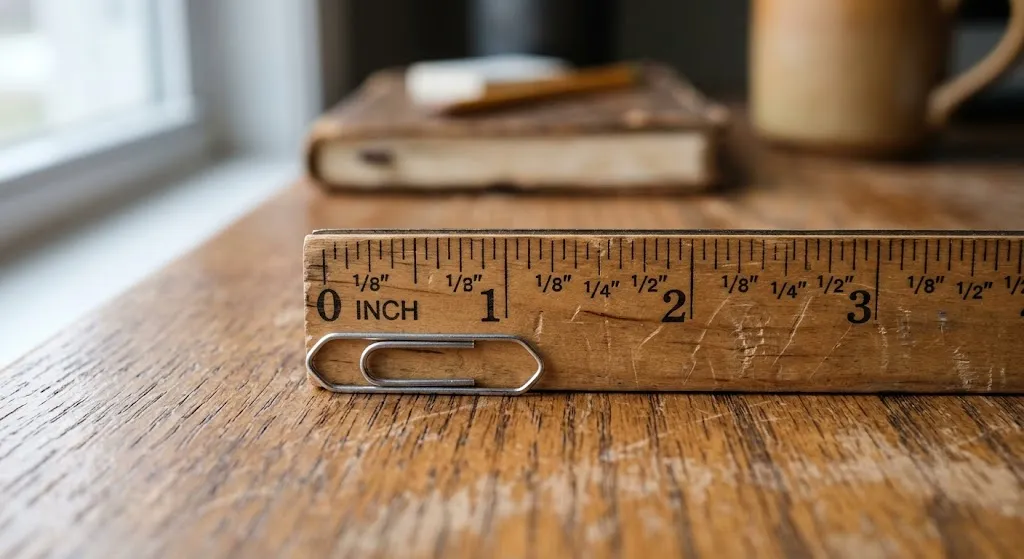
An ordinary small paper clip, having been bent straight, is nearly one inch. This sizing stays relatively constant among different manufacturers, allowing the comparison to be made between brands and countries.
The Top Joint Of Your Thumb
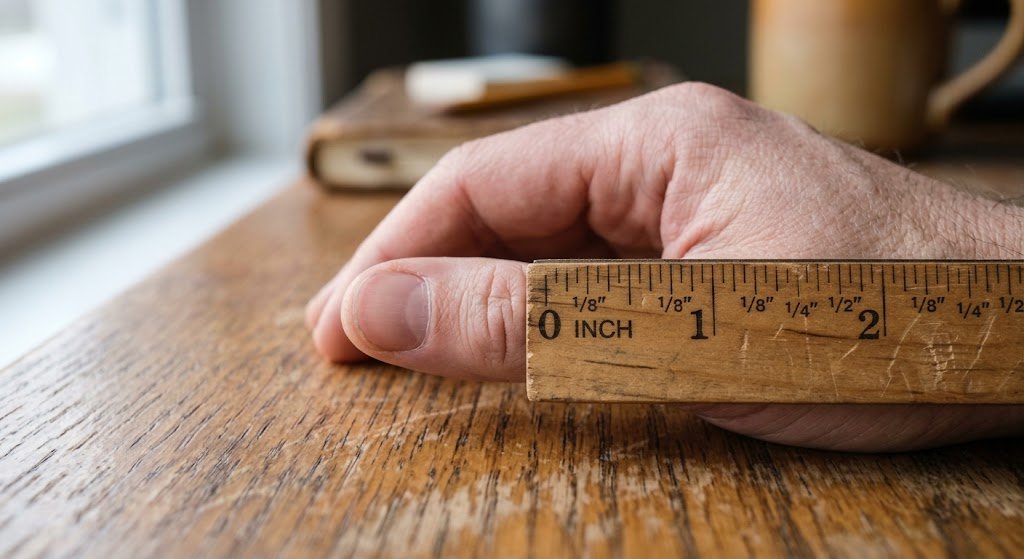
The distance from the tip of an adult thumb to the first knuckle lands close to one inch for most people. Traders and builders relied on this trick for centuries before rulers became common household items.
A US Quarter Coin
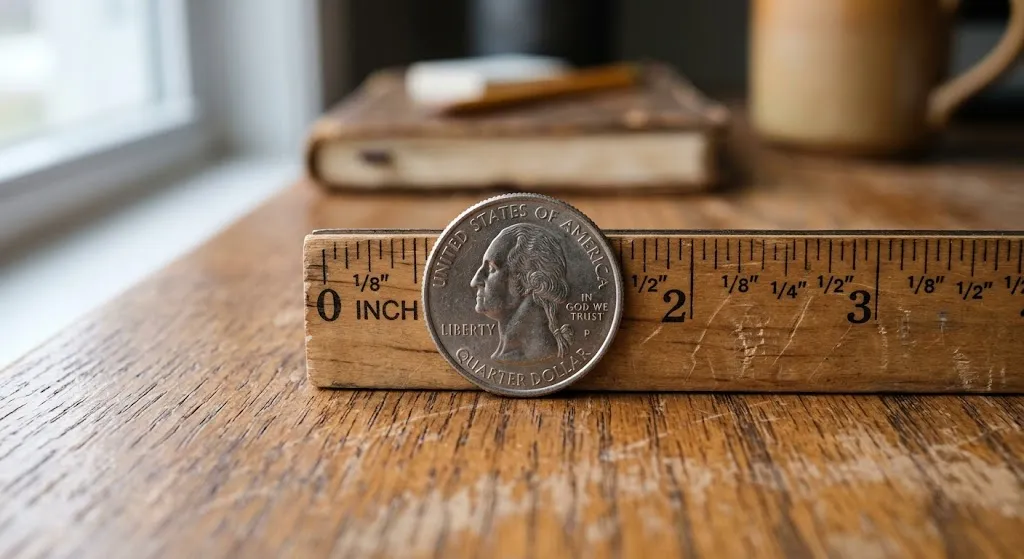
One US quarter has a diameter of 0.955 inches, just under one inch. This is a good comparison as coins do not change in size and nearly everyone has one as a quick check.
A Standard Six-Sided Die
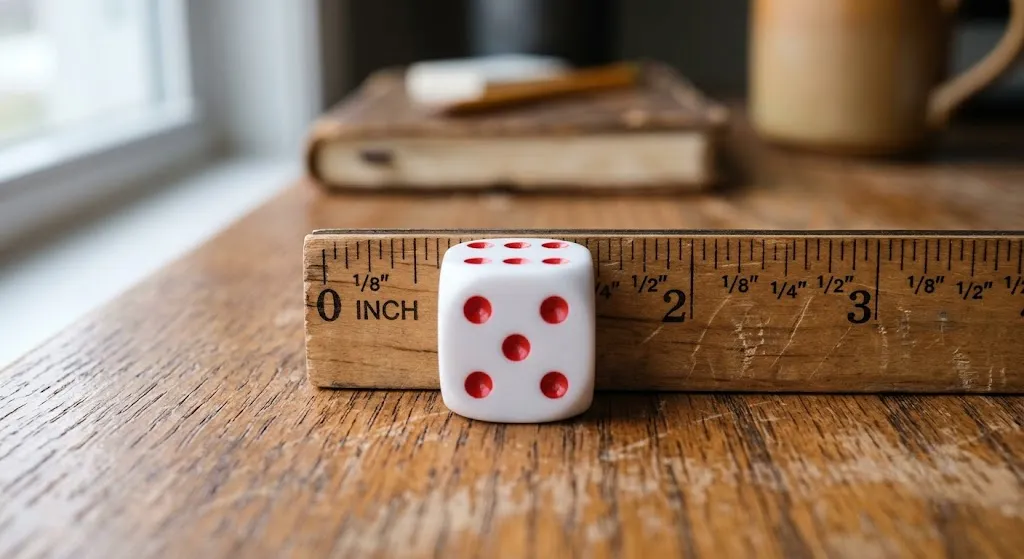
The face dimensions of a standard board game die are 0.6-0.8 inches on each side, varying by the producer. Casinos frequently use larger dice, which are around three-quarters of an inch.
A Plastic Bottle Cap
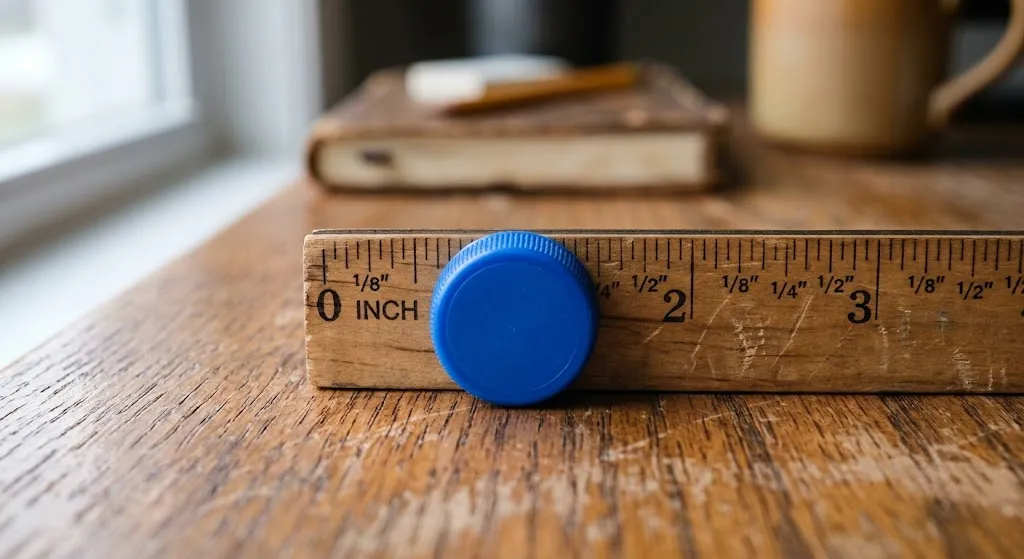
The size of most bottle tops of beverages is about 1.1 inches in diameter. A straight down looking attitude presents a very good idea of the circular measurements, and this aids in estimating the diameter of holes or small circular objects.
A USB Type-A Connector
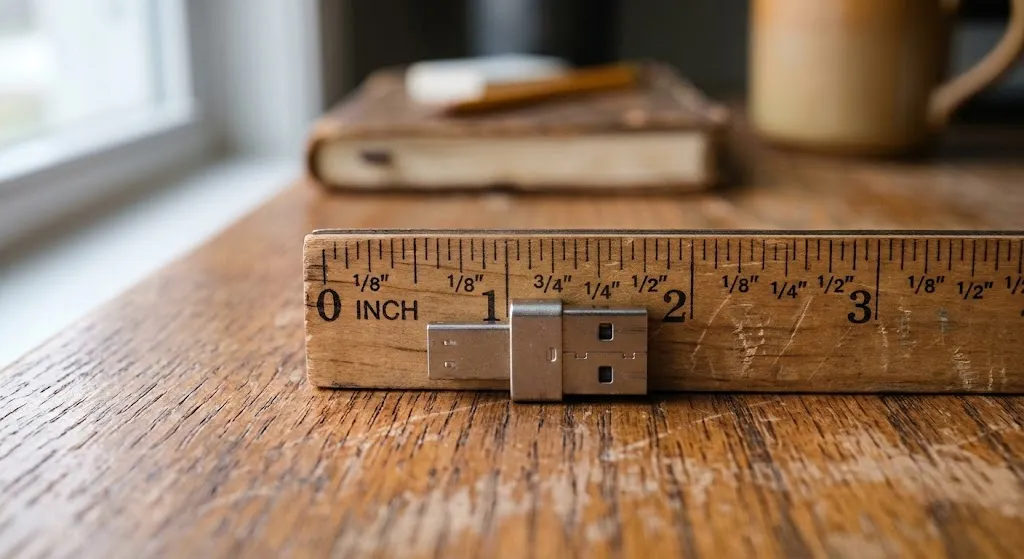
The metal connector on a standard USB flash drive measures close to 0.55 inches wide. USB hardware follows strict manufacturing standards, so this size stays consistent across every brand.
The Width Of An Adult Finger
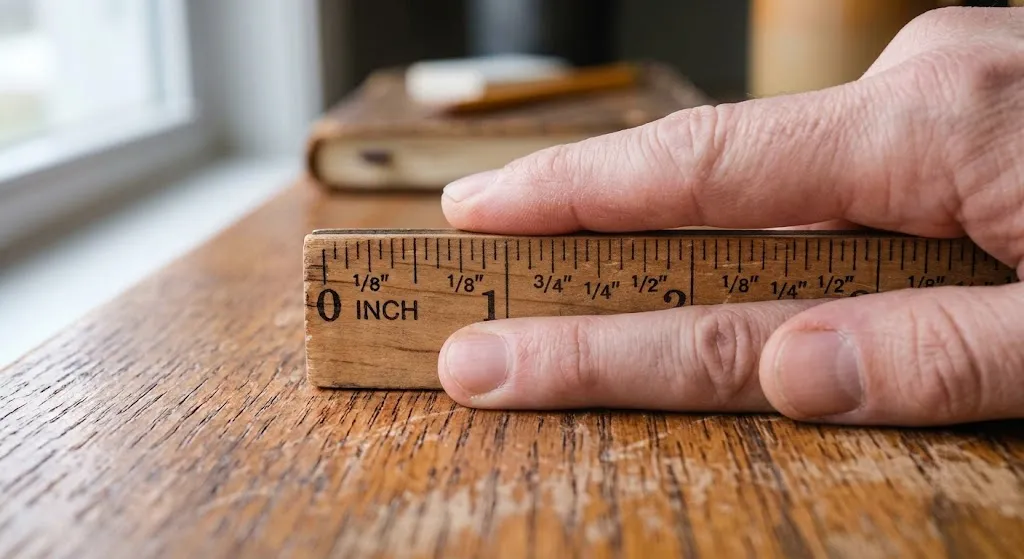
An average adult index finger measures roughly 0.7 to 0.9 inches wide, though this varies more than most references here. Even so, placing a finger sideways against an object gives a fast estimate without any tools.
A Classic Lego Brick
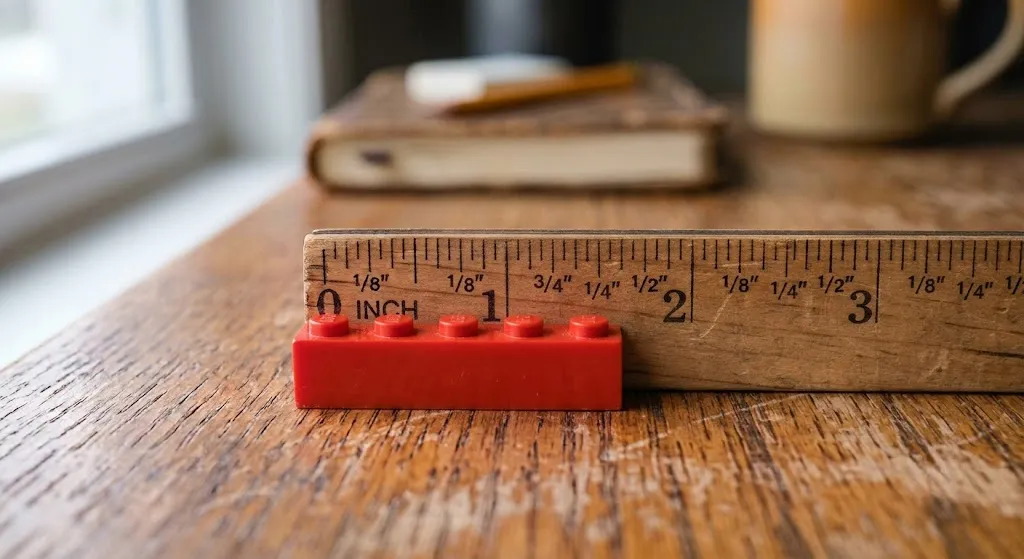
An average Lego brick has a single stud that is approximately 0.38 inches tall. Lego has very strict manufacturing tolerances, thereby making these bricks unexpectedly true to scale.
A Sewing Pin
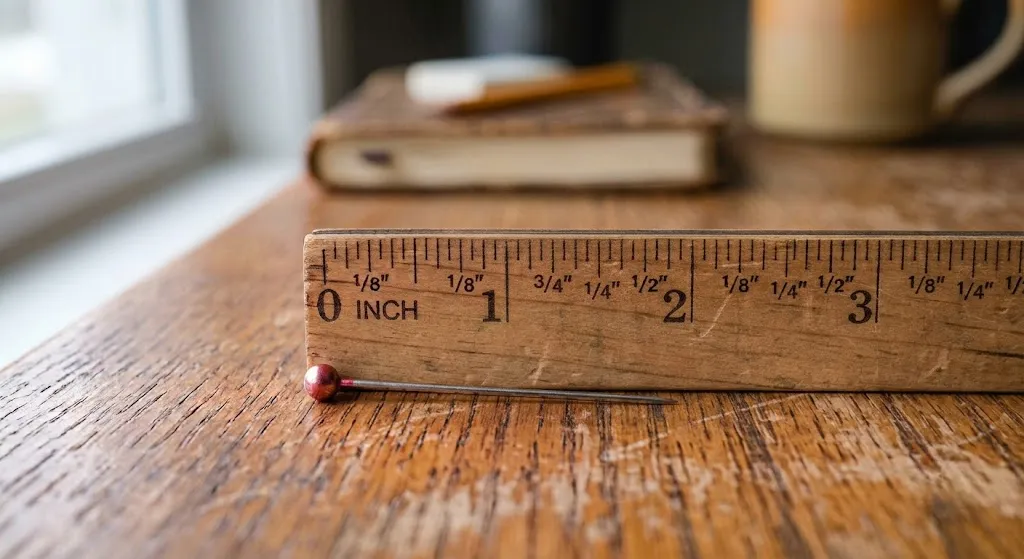
Standard dressmaker pins measure close to 1.06 inches from head to tip. Crafters and tailors often rely on pins to judge spacing when a ruler sits out of reach.
A Small House Key
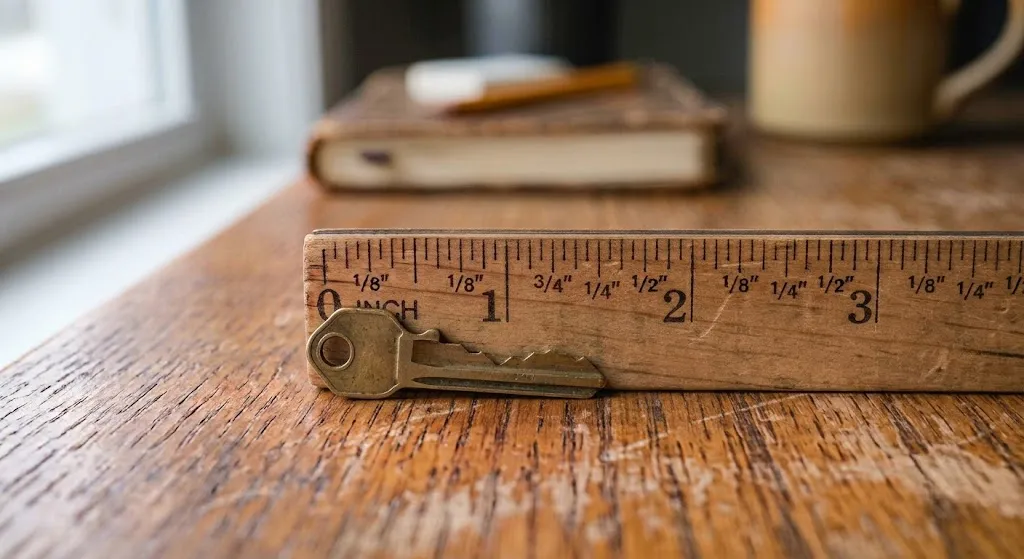
Most house or drawer keys measure between 1 and 1.2 inches across the widest part of the blade. Since keys travel with almost everyone daily, this comparison stays convenient wherever you are.
Inch Conversion Chart For Quick Reference
Converting inches into other units becomes simple once you memorize a few fixed numbers. The table below covers the most common conversions people search for.
| Measurement Unit | Equivalent Length |
| 1 Inch | 2.54 Centimeters |
| 1 Inch | 25.4 Millimeters |
| 1 Inch | 0.0833 Feet |
| 1 Inch | 0.0278 Yards |
Visual Size Comparison Of Common Objects
This table lines up each object mentioned above against the true one-inch mark, so you can see exactly how close or far each comparison lands.
| Item Name | Approximate Size | How It Compares to 1 Inch |
| Small paperclip | 1.0 inch | Very close match |
| Thumb joint (adult) | 1.0 inch | Close visual estimate |
| US quarter diameter | 0.955 inch | Slightly under 1 inch |
| Standard die side | 0.6 to 0.8 inch | Noticeably smaller |
| Bottle cap diameter | 1.1 inch | Slightly larger |
| USB connector width | 0.55 inch | About half an inch |
| House key width | 1.0 to 1.2 inch | Close to slightly over |
| AA battery diameter | 0.57 inch | About half an inch |
How the Inch Fits Into the Imperial Measurement System
Inches are part of the imperial system that is still used by the United States to make most everyday measurements. In the meantime, the majority of other nations are based on the metric system with centimeters and meters, and this is why the products offered by foreign stores might be confusing to US customers who are used to more common units.
Given that one inch is the same as 2.54 centimeters, there is nothing more than simple multiplication needed to make the conversion between the two systems. Any inch number multiplied by 2.54 would give the number of centimeters and vice versa. This predetermined relationship will never change, and once you learn it by heart, cross-border shopping and DIY planning will be much less confusing.
Mistakes People Make While Estimating An Inch
Estimation errors usually happen when people treat rough comparisons as exact measurements, and that habit causes more problems than expected. A quarter, for example, works fine for a glance but sits about five percent smaller than a true inch, and that gap adds up across multiple measurements.
- Assuming every adult’s thumb or finger matches the same width
- Treating visual comparisons as precise enough for cutting materials
- Confusing inches with centimeters while browsing international websites
- Forgetting that manufactured items like dice can vary between brands
- Skipping an actual tape measure for tasks where accuracy truly matters
Smart Ways To Measure Without A Physical Ruler
Some basic practices can make estimation much more correct, particularly when you multiply reference points rather than just using a single object. Comparing two objects with one another helps to identify errors before they become costly.
Practical Tips For Better Accuracy
- Keep a coin or paperclip nearby as a quick backup reference
- Use a smartphone measuring app when precision matters more than speed
- Compare two different reference objects before finalizing an estimate
- Reach for a real tape measure on tasks tied to construction or shipping
- Remember the fixed conversion, since 1 inch always equals 2.54 centimeters
Conclusion
Understanding how long an inch is becomes far easier once you connect it to objects you already know, like a paperclip, a quarter, or your own thumb. The official definition, 2.54 centimeters, is an exact, immutable number, but everyday comparison will allow that number to translate into something when you are in the shopping, building, or crafting business and have no ruler in your hand. Hold two or three of these to you, and you can seldom find yourself puzzled again.
Frequently Asked Questions
An inch equals exactly 2.54 centimeters.
A small paperclip and an adult thumb joint both land close to one inch.
Yes, an inch measures more than twice the length of one centimeter.
A paperclip, a quarter, or a house key all work as rough visual guides.
Historical infrastructure and conversion costs kept the US on imperial units.
Twelve inches make exactly one foot.
Exactly 2.54 centimeters fit into one inch.
No, a US quarter measures 0.955 inches, just under a full inch.
Only for rough estimates, since thumb size varies between people.
A yard equals 36 inches, making it the largest of the two units.
Aarav Choudhary
I’m Aarav Choudhary, a content researcher and technical writer with a strong interest in online calculators, unit conversion tools, and educational resources. At Measuresly, I focus on simplifying complex calculations into practical, reader-friendly content. Every article I write is thoroughly researched, fact-checked, and regularly updated to ensure accuracy and reliability.