

Last Updated: 27 August 2026
Two inches shows up more often than most people realize, whether you’re checking a product label, measuring a screen, or trying to picture a small object without a ruler nearby. Understanding this measurement helps you shop smarter, follow instructions accurately, and avoid sizing mistakes that waste time and money. I’ve broken down every angle of this measurement here, from exact conversions to real objects that match this size almost perfectly.
Throughout this article, I’ll walk you through practical comparisons, clear conversion tables, and answers to questions people search for constantly. You won’t need a calculator or a measuring tape to follow along, since every example connects to something you likely already own or recognize. By the end, you’ll estimate two inches confidently in any situation, whether you’re shopping online, working on a craft project, or simply satisfying your curiosity.
2 Inches Conversion Chart: Quick and Accurate Measurement
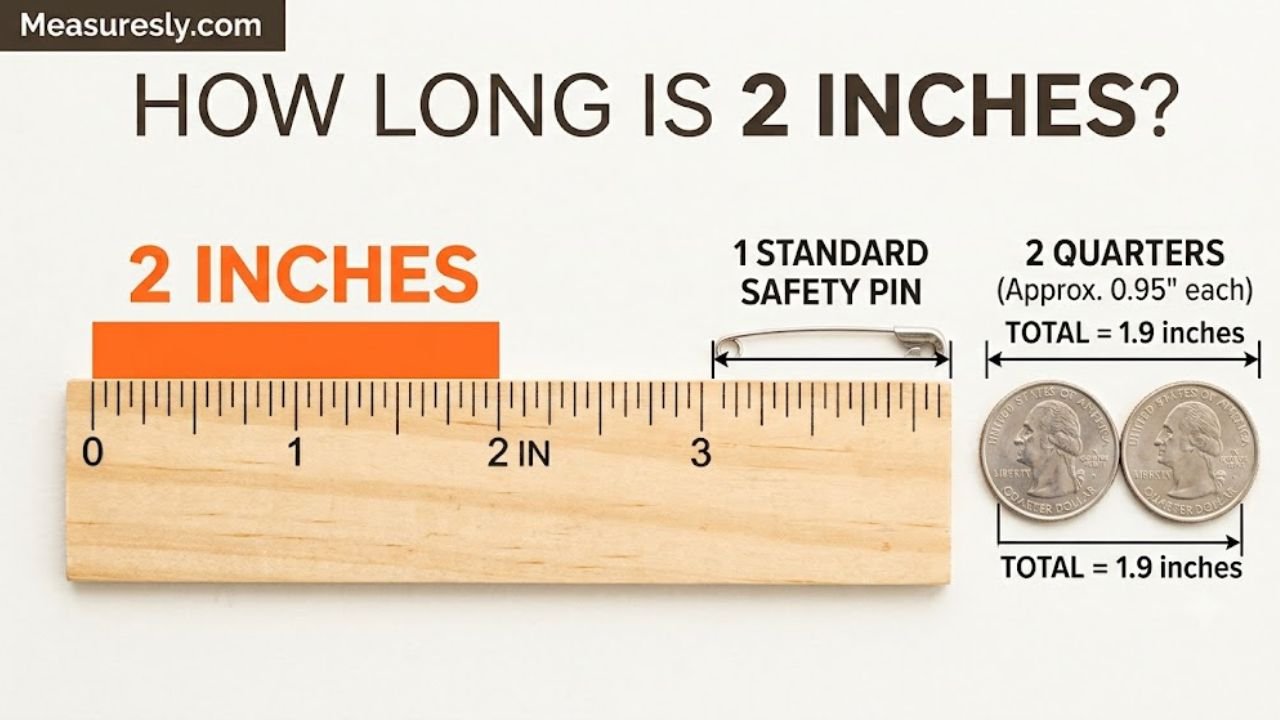
Understanding how much 2 inches equals in different measurement units helps make everyday measurements easier, whether you are working on DIY projects, checking product sizes, or comparing dimensions. The following conversion chart provides quick and accurate values for converting 2 inches into feet, centimeters, millimeters, and meters.
| Unit | Value |
| Inches | 2 |
| Centimeters | 5.08 cm |
| Millimeters | 50.8 mm |
| Feet | 0.167 ft |
| Meters | 0.0508 m |
| Yards | 0.0556 yd |
| Micrometers | 50,800 µm |
- Use Our Unit Converter: Free Online Unit Converter
2 Inches to CM, MM, Feet, and Other Units
People often search for multiple conversions instead of just centimeters. Combining all common conversions into one section improves SEO and user experience.
2 Inches to Centimeters
Since one inch equals exactly 2.54 centimeters, multiplying two inches by 2.54 gives:
| 2 × 2.54 = 5.08 cm |
This conversion is widely used in education, shopping, healthcare, and engineering.
2 Inches to Millimeters
Millimeters provide greater precision than centimeters. Since one inch equals 25.4 millimeters, two inches equals:
| 2 × 25.4 = 50.8 mm |
This conversion is commonly used in manufacturing, mechanical engineering, 3D printing, and construction.
2 Inches to Feet
There are 12 inches in one foot.
Therefore:
| 2 ÷ 12 = 0.167 feet |
Although this conversion is less common in everyday life, it is useful in home improvement and architectural measurements.
2 Inches to Meters
Since one meter equals 100 centimeters, the conversion is:
| 5.08 cm ÷ 100 = 0.0508 meters |
This measurement is often used in scientific calculations and technical documentation.
2 Inches Comparison Chart
| Measurement Type | Equivalent Size |
| Inches | 2 inches |
| Centimeters | 5.08 cm |
| Millimeters | 50.8 mm |
| Fingers | 2 adult fingers side by side |
| Coins | 4 to 5 stacked large coins |
| Paperclip | 1 standard paperclip |
| Credit Card | Short side width |
| USB Drive | Small flash drive length |
| Golf Ball | Slightly larger than diameter |
| Bottle Cap | Diameter of standard cap |
| Thumb | Average adult thumb length |
How Many MM Is 2 Inches?
2 inches to mm is 50.8 mm, which is significant in various applications such as engineering, 3D printing, and precision manufacturing. Because millimeters have more detail than centimeters do, professionals tend to change and use this unit when it makes or breaks a project.
This change is according to the same 25.4 mm-per-inch world standard, meaning that the answer is always the same regardless of where you find it. When you need to order replacement parts or make some measurements to a design file, then this exact number makes the process completely devoid of guesses.
How Long Is 2 Inches in Simple Terms?
Two inches is the breadth between the mark and the number two on any common ruler. It is about as long as a big paperclip or regular matchstick and short enough to fit in the palm of your hand.
Length and size are terms that are easily confused, although they have equal meaning in this context, as two inches defines a linear straight measure. When you can associate this number with something you can see and touch, then it seems so much easier and quicker to compare this number with other things.
Everyday Objects That Help Visualize 2 Inches
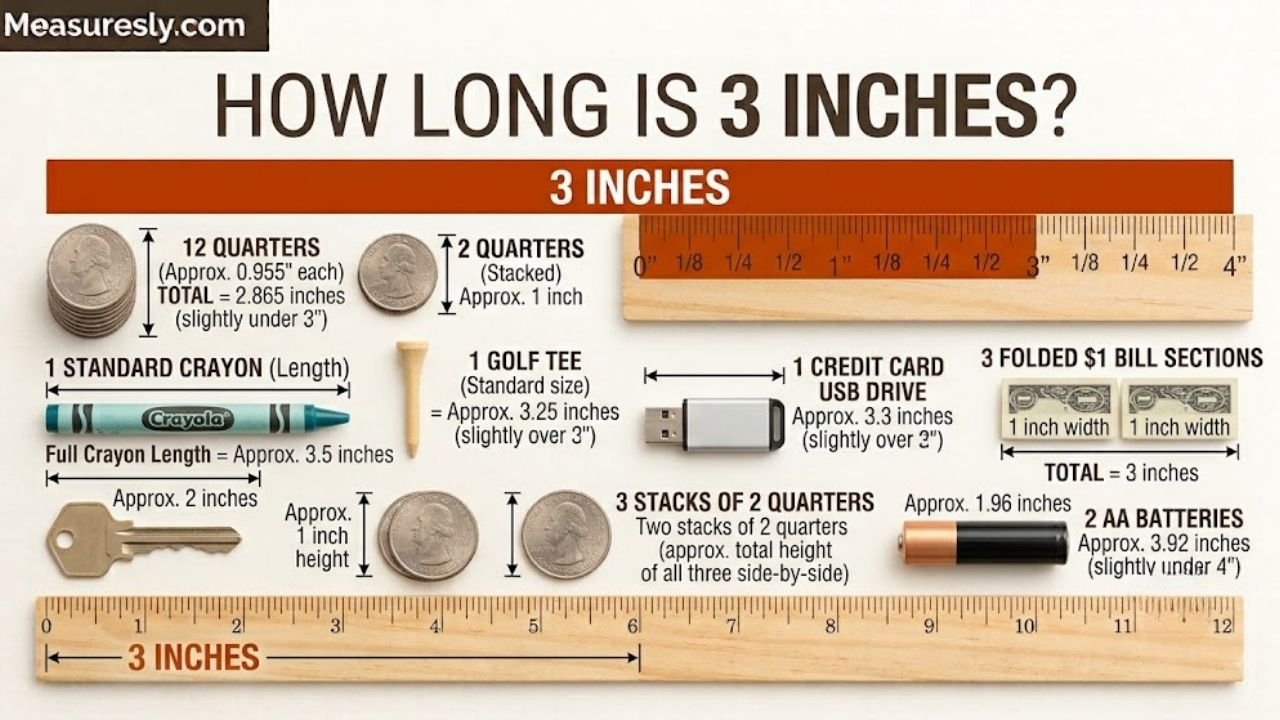
It seems that many are unable to make some estimates without a ruler. Luckily, various common items are almost the same size as two inches, and so, direct eyeball estimations are far simpler.
Examples include:
- A standard paperclip
- A wooden matchstick
- Two adult fingers placed side by side
- A small USB flash drive
- The shorter edge of a credit card
Such comparisons would allow you to estimate size when at the store shopping, crafting or determining the measurement of minor items that exist in the home.
How Big Is 2 Inches Really?
Two inches is a little less than half the length of a credit card on the shorter side, or the size of a golf ball in your hand. A quick, on-the-fly idea of this size will be provided by simply pressing two fingers together, without having to pick up an instrument.
This scale is present everywhere on the packaging of products, hardware specifications, and even on cloth tags. This particular size is commonly the one around which designers construct small units since it is a comfortable size, not so large as to be difficult to handle, but not so small that it can fit into a pocket and be transported easily.
12 Everyday Things That Are About 2 Inches Long
Numbers alone rarely stick in your memory, but objects do. It is natural to have connected two inches to something you see or touch every day, and you no longer need a ruler to measure it with an approximation. Below is an examination of twelve typical objects that are almost as big as this size.
A Standard Paperclip
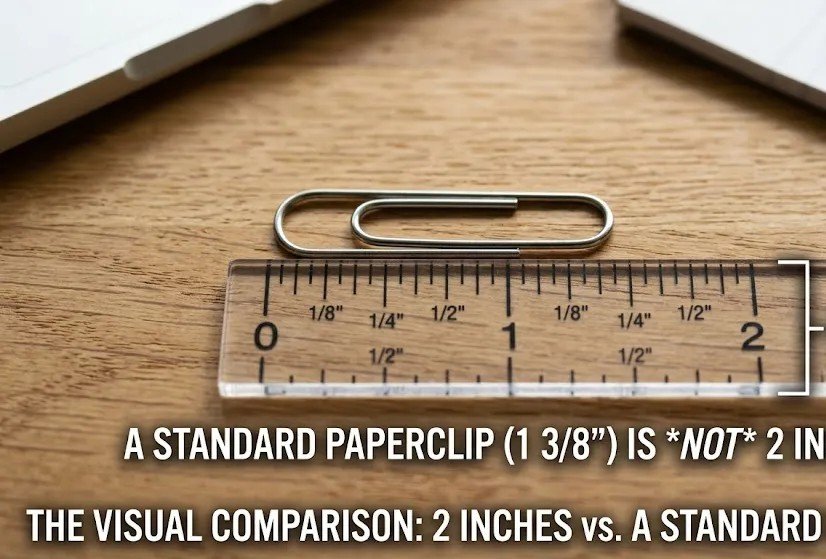
Most office paperclips measure between 1.9 and 2 inches, making them one of the easiest references available in almost any workspace. They are always handy, as they are always similar in size and shape, and are always flat, which means that you could use them quickly to compare things visually, and you may not even have to look far, as they are everywhere, on desks, in junk drawers, etc.
The Short Side of a Credit Card
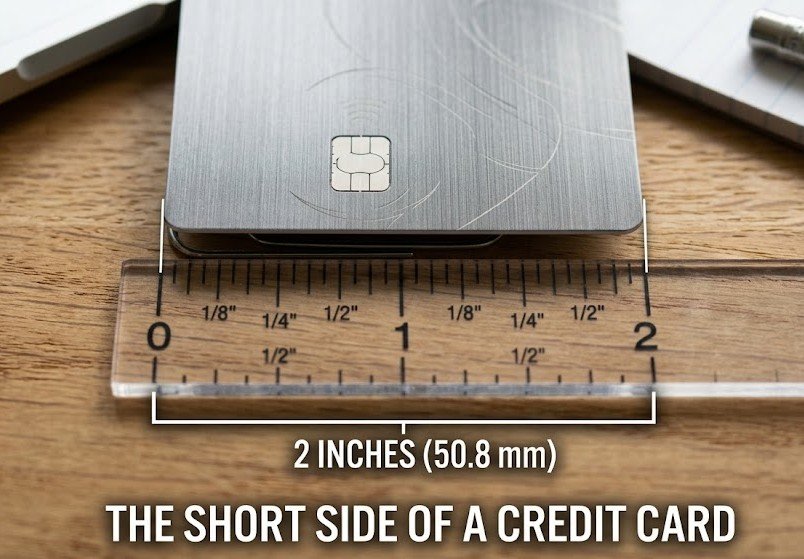
Every standard credit or debit card follows the same international sizing rules, so the shorter edge lands just under two inches. Because these cards are mass-produced to identical dimensions worldwide, they double as one of the most reliable pocket-sized measuring references you’ll ever come across.
A Stack of 4 to 5 Large Coins
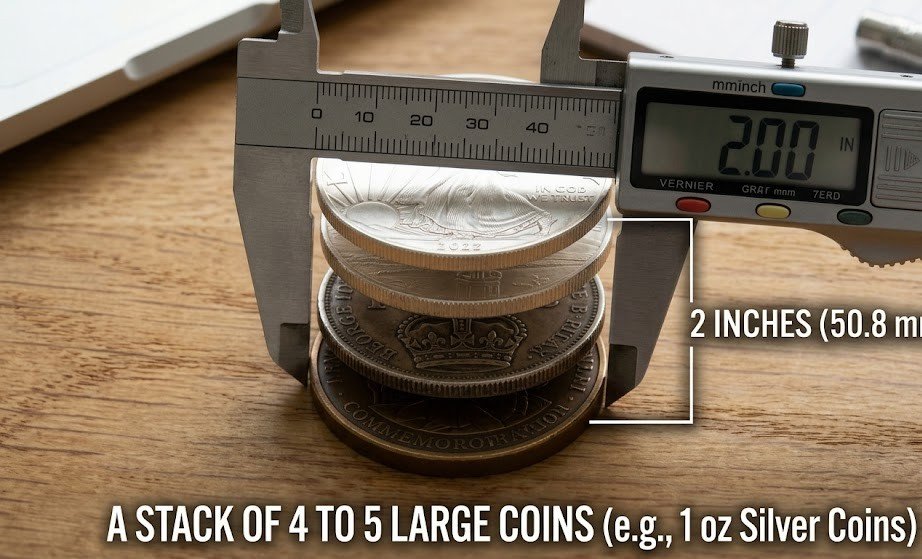
A pile of four or five large coins, such as quarters, has a height of nearly two inches. The comparison is especially effective when you are estimating the thickness or vertical distance instead of length, and your coins do not compress or fold; thus, the measurement won’t change the next time you make it.
The Diameter of a Golf Ball
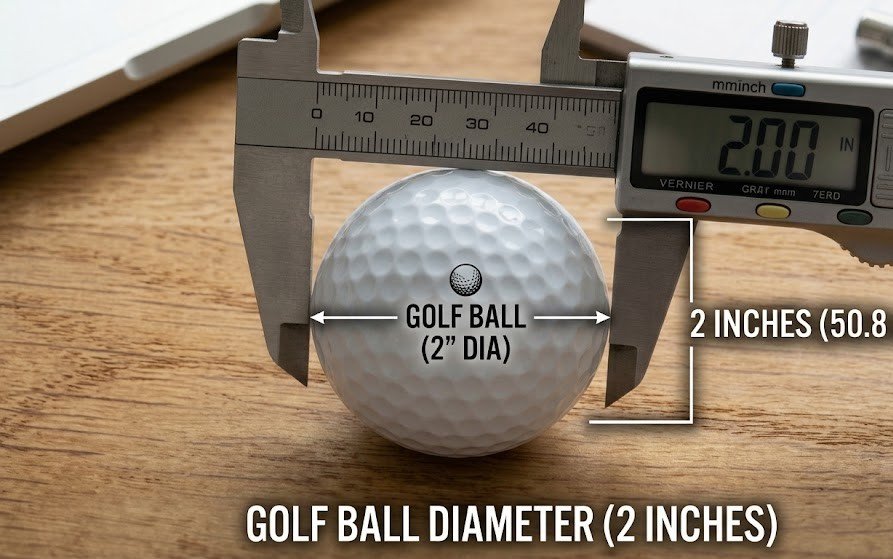
The ball in regulation golf is 1.68 inches in diameter, and this is sufficiently near to two inches to two inches to make quick comparisons. As the ball is round, it provides you a three-dimensional feeling of the measure, handy when you are imagining a thickness or a width as opposed to a straight line.
A Small USB Flash Drive
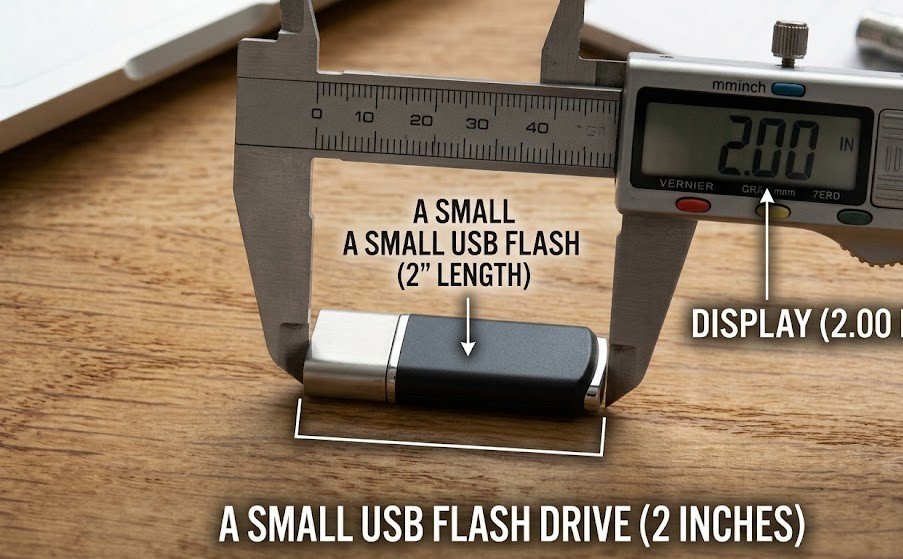
Minimalist or older compact flash drives tend to be nearly two inches in length. These drives are deliberately designed around this size by manufacturers, as it will be a comfortable keychain or pocket without being large and embarrassing to carry everywhere.
A Wooden Matchstick
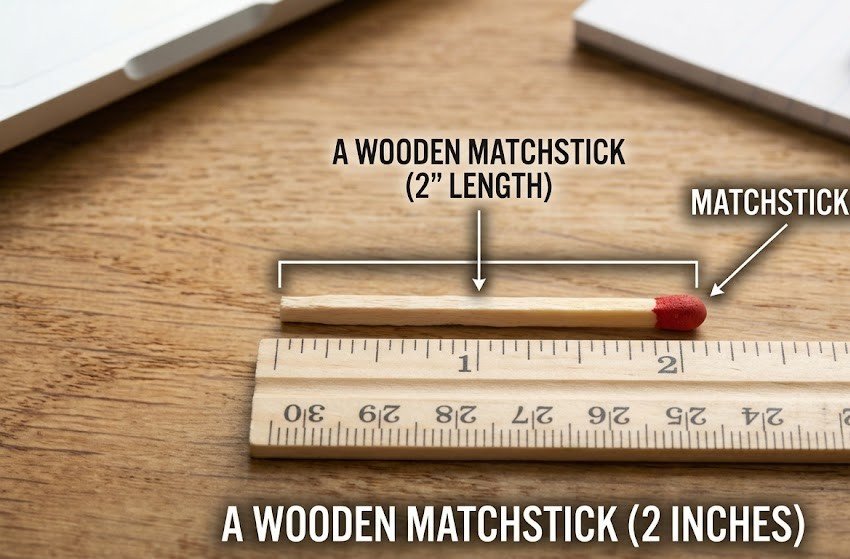
A normal matchstick is between 2 inches long, a balance between safety and comfort. This length keeps your fingers well out of the flame without getting too long to put in small matchboxes, and this is precisely the reason this size has never had to change in all the generations.
A Bottle Cap’s Diameter
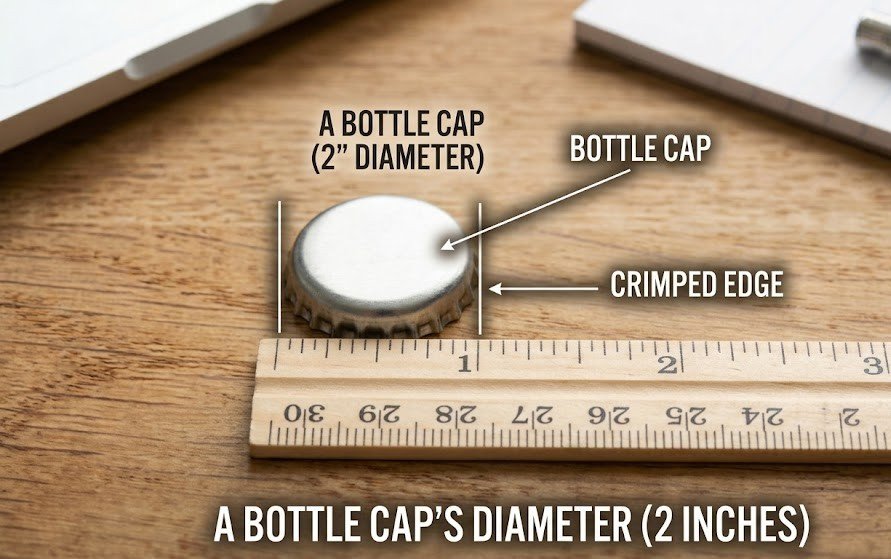
The majority of plastic and metal bottle tops are almost two inches in diameter, which provides you with enough room to hold, and even to twist, without straining your finger. This comparison is an instant, no-pain reference as bottles are found in most kitchens and stores.
An Adult Thumb
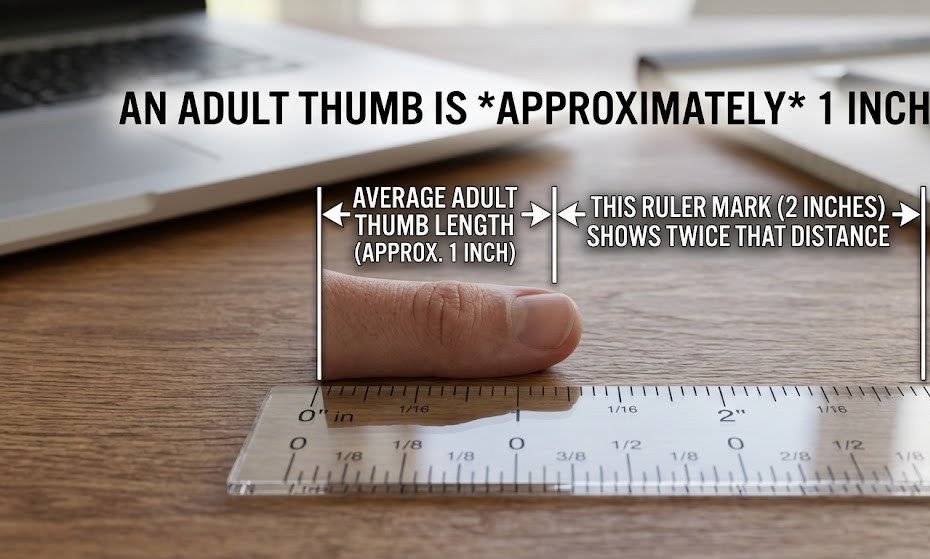
Measuring approximately 2 inches base to tip, the thumb of the average adult, this makes your own hand a measuring rod. As people have slightly different hand sizes, this technique is quicker at estimating, rather than using it during tasks where accuracy is needed.
A Small Binder Clip
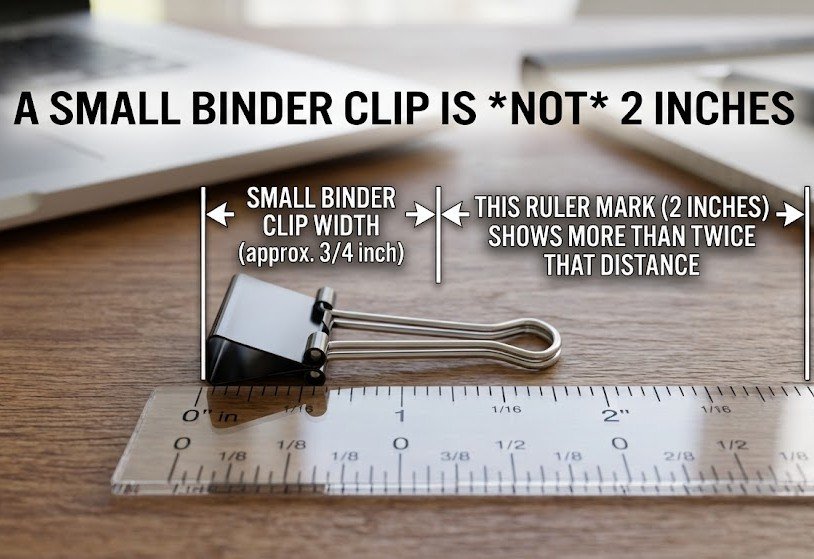
The width of a binder clip is slightly less than two inches when it is opened. Practicality of size is considered in the design of these office supplies, large enough to support multiple sheets of paper, but small enough not to occupy unneeded desk space.
A LEGO Minifigure’s Head and Torso
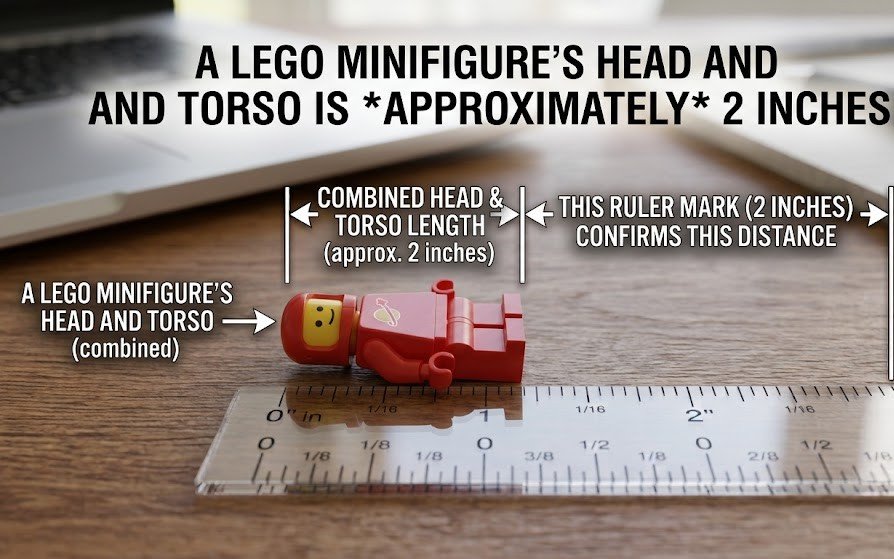
Combine a LEGO minifigure’s head and torso, and the total height lands close to two inches. Since LEGO pieces follow extremely precise manufacturing standards, this comparison works surprisingly well for visual thinkers, especially anyone who grew up building with these bricks.
A Compact Sewing Needle Case
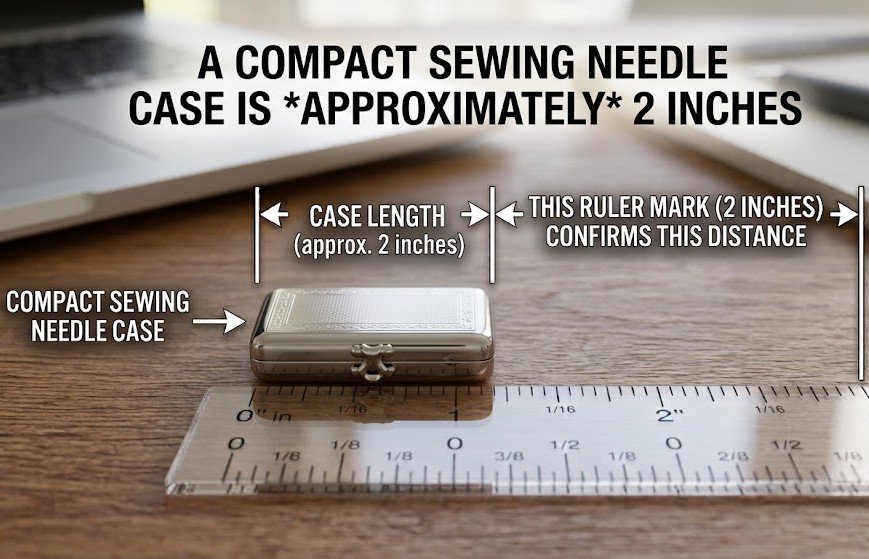
Travel-sized sewing needle cases are usually smaller in length, around two inches, made as such to be stored safely and portably. This size ensures that needles are not lost when it still fits well in a sewing kit, a purse, or a drawer and does not bulge.
Two Adult Fingers Side by Side
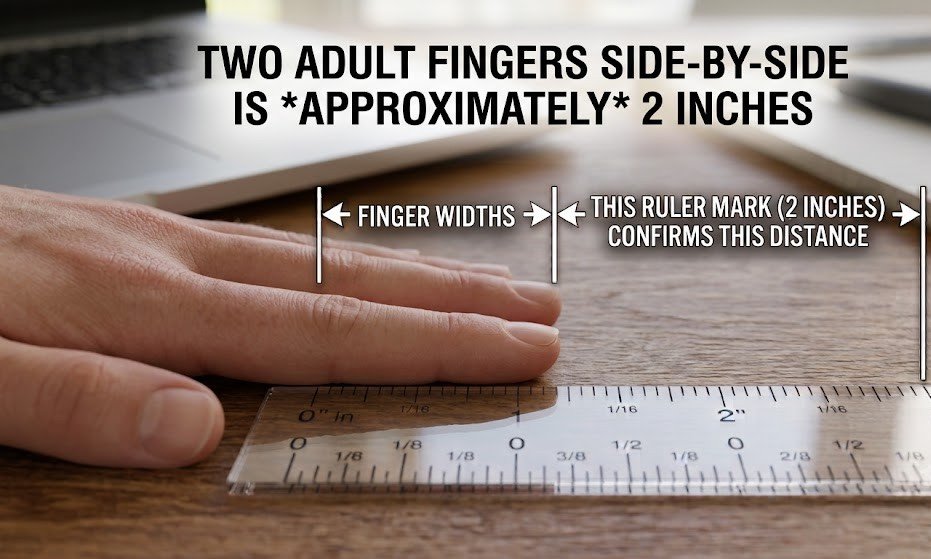
On average, adult fingers, put two fingers side-by-side, and the width of the two fingers is about two inches. This trick is repeatedly used by builders, tailors, and designers when they must have a quick estimate and do not have a measuring tape at their disposal.
Where 2 Inches Shows Up in Real Life?
Small measurements influence far more decisions than people expect. When you’re buying a phone case, checking whether a package fits through a mail slot, or dicing vegetables for a recipe, this exact size determines whether the final result turns out correctly.
Construction work depends on this measurement heavily as well. A board labeled “two by four” actually measures closer to 1.5 inches thick after milling, which confuses plenty of first-time builders who expect the label to match the literal size. Recognizing this gap between labeled and actual dimensions saves you from ordering the wrong materials.
Mistakes People Make With This Measurement
A two-inch reduction to the approximate 5 cm rather than the actual 5.08 cm results in real troubles in tailoring, 3D printing, and machining. That additional fraction appears so small, yet in precision work, it can mean the difference between a part sliding or hitting its limit.
People confuse nominal sizing with the actual sizing layers, a person also when it depends on pipes, lumber, and hardware. Another part with a label of 2 inches does not necessarily measure that at all after you take in the standard in manufacturing, and this is why it saves time and also time later on once one has made a purchase to test the size and whether it be less or even more.
Quick Fixes for Common Sizing Errors
- Always apply the 2.54 cm-per-inch formula instead of rounding for precision tasks
- Double-check actual versus nominal sizing before buying lumber, pipes, or hardware
- Keep a mental list of reliable references like a paperclip or your thumb for instant estimates
- Cross-verify product listings when inches and centimeters appear together on packaging
Smart Ways to Estimate This Size Without Tools
Keeping a few go-to references in mind speeds up everyday estimation dramatically. A credit card, a golf ball, or your own thumb works perfectly for casual situations where a calculator feels unnecessary and slows you down.
Building this habit pays off over time, since you’ll start recognizing similar measurements almost instinctively. Once you practice comparing objects around your home, estimating unfamiliar sizes becomes second nature within just a few tries.
Final Thoughts
Two inches might look small on paper, but it plays a surprisingly large role in everyday life, from the cards in your wallet to the tools scattered across your desk. Once you connect this measurement to a handful of familiar objects, you stop needing a ruler altogether, and estimating becomes second nature within seconds. Whether you’re shopping, building, cooking, or just curious, understanding this simple conversion gives you a small but genuinely useful skill you’ll end up using more often than you’d expect.
FAQs
Yes, since 2 inches equals 5.08 cm, slightly larger than a flat 5 cm.
2 inches equals exactly 5.08 centimeters.
2 inches to mm equals exactly 50.8 millimeters.
A standard paperclip closely matches 2 inches in length.
No, a golf ball measures 1.68 inches in diameter.
2 inches equals about 0.17 feet.
Yes, two adult fingers together roughly equal 2 inches.
No, most phones measure wider, closer to 2.6 to 2.8 inches.
No, the conversion to 5.08 cm stays fixed every time.
Because milled lumber often measures smaller than its labeled size.
Aarav Choudhary
I’m Aarav Choudhary, a content researcher and technical writer with a strong interest in online calculators, unit conversion tools, and educational resources. At Measuresly, I focus on simplifying complex calculations into practical, reader-friendly content. Every article I write is thoroughly researched, fact-checked, and regularly updated to ensure accuracy and reliability.